






 FR
 EU

- 4min
- 25/06/2026
How does an air fryer work?
In recent years, the airfryer has established itself as the go-to appliance for quick, light cooking. Crispy chips, roast chicken, caramelised vegetables: almost everything goes through this oil-free fryer that promises to transform our kitchen habits. But how does an air fryer really work? What technology is behind this oil-free cooking? Here's what you need to know to understand and get the most from this appliance.
In a Nutshell
-
An airfryer works by circulating hot air at high speed, like a miniature, high-powered convection oven
-
It reduces fat use by up to 75% while preserving crispiness
-
It uses between 36 and 73% less electricity than a traditional oven
-
For best results: space out food, don't overfill the basket, add a light drizzle of oil
The technical principle: cooking with hot air
An airfryer is first and foremost a miniaturised, high-powered convection oven. A heating element generates intense heat between 160 and 200°C, a powerful fan propels this hot air at very high speed throughout the cooking chamber, and the air wraps around the food from every angle, cooking it evenly throughout.
This rapid circulation reproduces the effect of frying without immersion in oil. The intense heat causes two simultaneous phenomena: the surface of the food dehydrates quickly, while sugars and proteins react together to create the Maillard reaction. That's the chemical reaction responsible for the golden, crispy crust we're all after. Inside, the food stays tender and moist.
Compared to a traditional oven that heats a large volume of stagnant air, the airfryer creates a real thermal whirlwind in a compact space. The result: faster, more uniform cooking with lower energy consumption. It's easy to understand why this compact countertop appliance is revolutionising everyday cooking.
The advantages of this cooking method
Measurable energy savings
The figures speak for themselves. According to tests by UFC-Que Choisir, airfryers consume between 36 and 73% less electricity than a traditional oven. Why?
-
No preheating required in most cases
-
A much smaller volume to heat
-
Temperature reached in a matter of minutes
-
When grilling chicken, energy use drops to a third
This speed makes a real difference. An airfryer reaches the right temperature in a handful of seconds, while a traditional oven can take fifteen minutes just to preheat. Shorter cooking times mean lower bills and a simpler daily routine.
Healthier cooking
The airfryer dramatically cuts fat intake. Where a traditional deep fryer needs several litres of oil, the airfryer gets by with a light drizzle. That's more than 75% less fat compared to deep frying, without giving up taste or that all-important crispy texture. A genuine step forward for lighter cooking that doesn't feel like a compromise.
Everyday versatility
The airfryer isn't just for chips. This oil-free fryer opens up a wide variety of possibilities in the kitchen. You can cook:
-
Roasted vegetables (courgettes, peppers, carrots, potatoes)
-
Crispy meats and fish
-
Golden fritters
-
Certain desserts, such as muffins or cakes
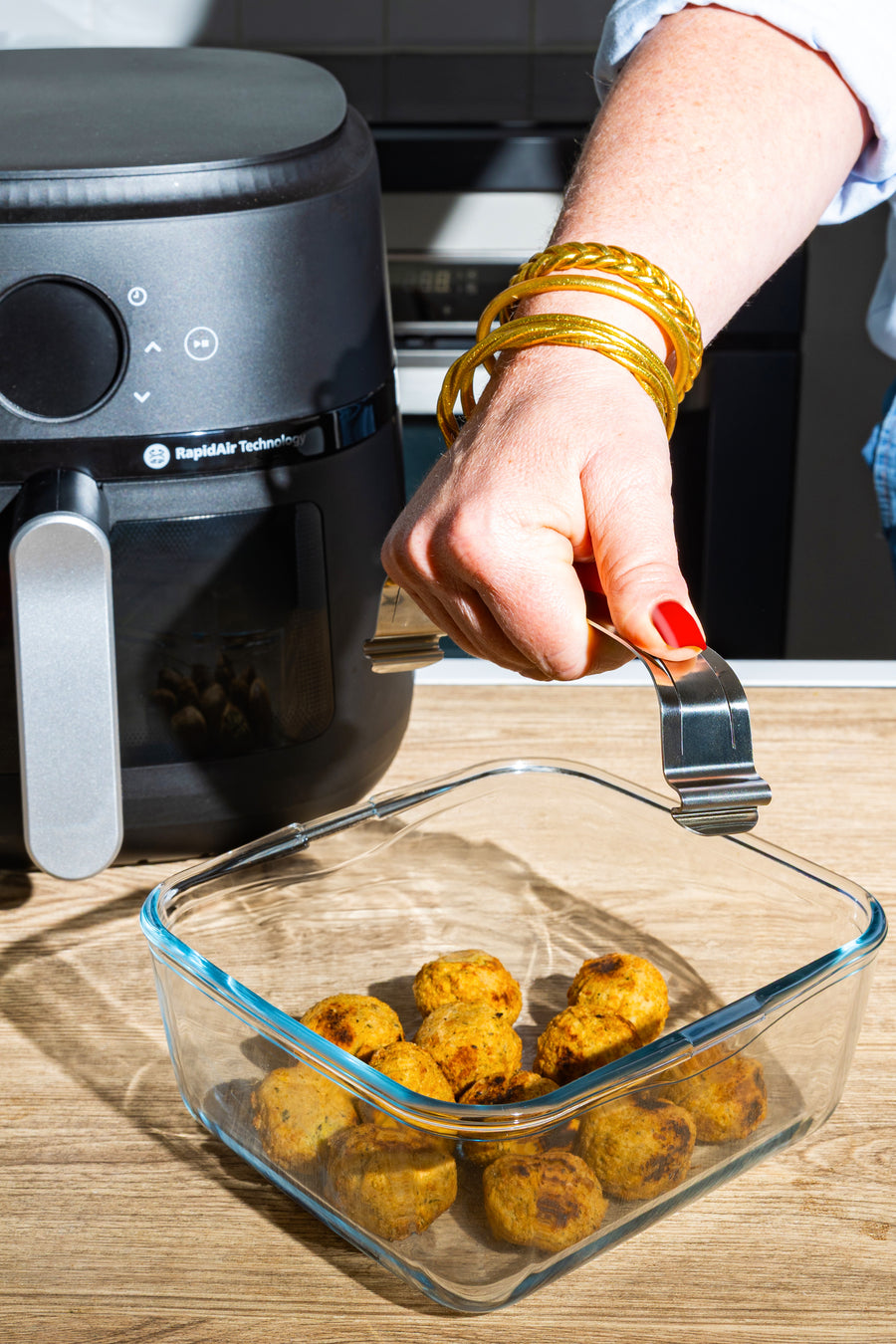
A chicken breast turns crispy on the outside and tender on the inside in fifteen minutes. Fresh potatoes become golden homemade chips without a drop of oil to bathe in. Simple, quick recipes that work any day of the week. That kind of flexibility makes the airfryer a truly versatile all-rounder in the modern kitchen, whether you're cooking for the family or just for yourself.
A genuine time-saver
Thanks to high-speed air circulation, cooking times are cut by 30 to 40% compared to a traditional oven. No waiting for the oven to preheat, no hovering over the hob: put the food in, set the temperature and time, and you're good to go. On busy evenings, the airfryer earns its place on the worktop.
Limitations to be aware of
Like any appliance, the airfryer has its constraints.
Limited capacity: even XXL models can struggle to cook for a large family. If you're regularly feeding six or more, you'll likely need to cook in batches. It's worth keeping quantities in mind when planning meals.
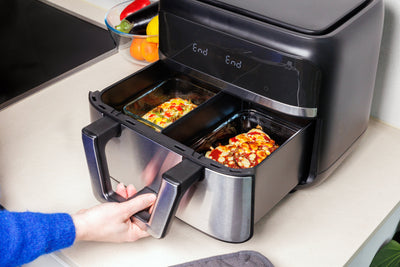
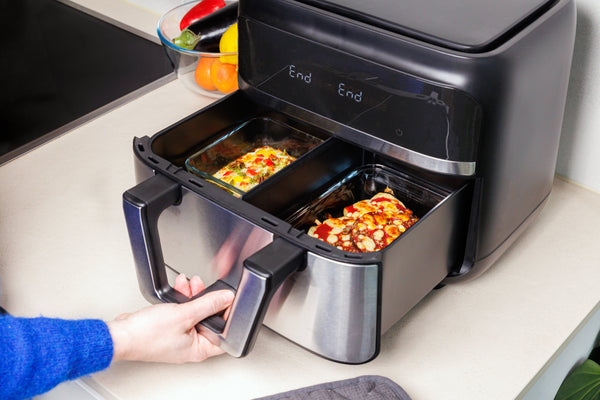
Not suitable for everything: the airfryer doesn't work for recipes that need liquid immersion. Rice cooked in water, wet batters, anything that needs to boil — these are better left to saucepans and casserole dishes. To get the best from your appliance, it helps to use Air Fryer dishes sized to fit it properly.
Fan noise: some models are on the loud side. The whole principle depends on a powerful fan running throughout cooking, so a certain amount of noise comes with the territory.
Practical tips for successful cooking
Key habits for getting it right
Never overfill the basket: Two-thirds full is the maximum. Air needs to move freely around every piece of food to cook it evenly. This one rule makes the difference between golden, evenly crisped chips and a disappointing pile of steamed food.
Space things out: Arrange food in a single layer where possible, without overlapping. If you do need to stack, give the basket a shake halfway through to rotate everything and expose all surfaces to the hot air. It's the best way to avoid soft patches and get an even crisp all over.
Add a drizzle of oil: The "oil-free" marketing doesn't tell the whole story. A light coating of oil makes a real difference to crispiness and colour. A teaspoon is plenty for 500g of homemade chips or veg — enough to bring out the flavour without undoing the health benefits.
Turn or shake halfway through: Flip a chicken breast at the halfway point, shake chips or diced veg. A few seconds of effort guarantees an even cook and a much better result.
Matching temperature to your ingredients
Each type of food has its sweet spot:
-
Tender vegetables (courgettes, peppers): 160–170°C
-
Dense vegetables (potatoes, carrots): 180–190°C
-
Meat and fish: 180–200°C
These temperature guidelines give you a solid starting point. With a little practice, you'll find yourself adjusting instinctively.
Common mistakes to avoid
A few habits worth building from the start:
-
Avoid watery marinades — they pool at the bottom, cause smoke, and work against crispiness
-
Dry spices, a little oil, and fresh herbs are your best friends for flavour
-
Drain marinated food well before it goes in the basket
-
Clean the appliance regularly to keep odours at bay and extend its lifespan — most baskets and trays are dishwasher-safe
For even better results, Air Fryer dishes from Pyrex are designed to fit neatly inside your appliance and deliver optimal cooking without blocking airflow. The right accessories open up more recipes and make the whole experience more straightforward.
FAQ
Does an air fryer really use less energy than an oven?
Yes. Tests have found that airfryers use between 36 and 73% less electricity than a conventional oven. They heat up faster, skip the preheat altogether in most cases, and work in a much smaller space. The savings add up quickly.
Do you need to add oil in an air fryer?
A small amount, yes. A light drizzle of oil makes a real difference to crispiness and flavour — a teaspoon for 500g of food is all it takes to get a good golden colour without going anywhere near deep-frying territory. Best of both worlds.
Which foods can't be cooked in an air fryer?
Anything that needs to cook in liquid: rice, wet batters, food that needs to boil. The airfryer works with dry hot air, not liquid heat transfer — so for those recipes, a saucepan is still your best bet.
Our recommendations
- NEW

Vendor
- PERFECT FOR AIR FRYER
Vendor
More variations
- AIR FRYER SET
Vendor
And what about the menu?
Only one rule, treat yourself!
The entrees
And for the dishes
The desserts
You might like these articles
-
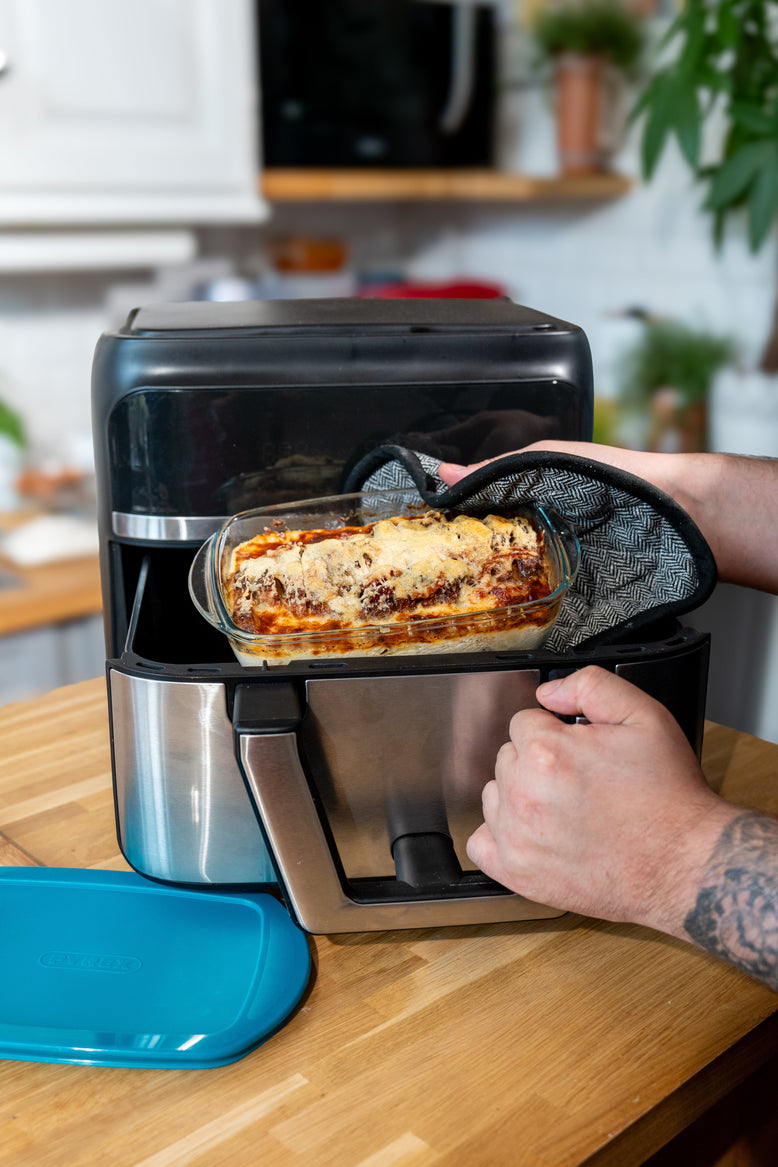
Recipe : Air fryer lasagna
Lasagne in an air fryer: instructions Want to make lasagne in your air fryer? This recipe works very well for four people, as long as you choose a dish that...
22/10/20263min -
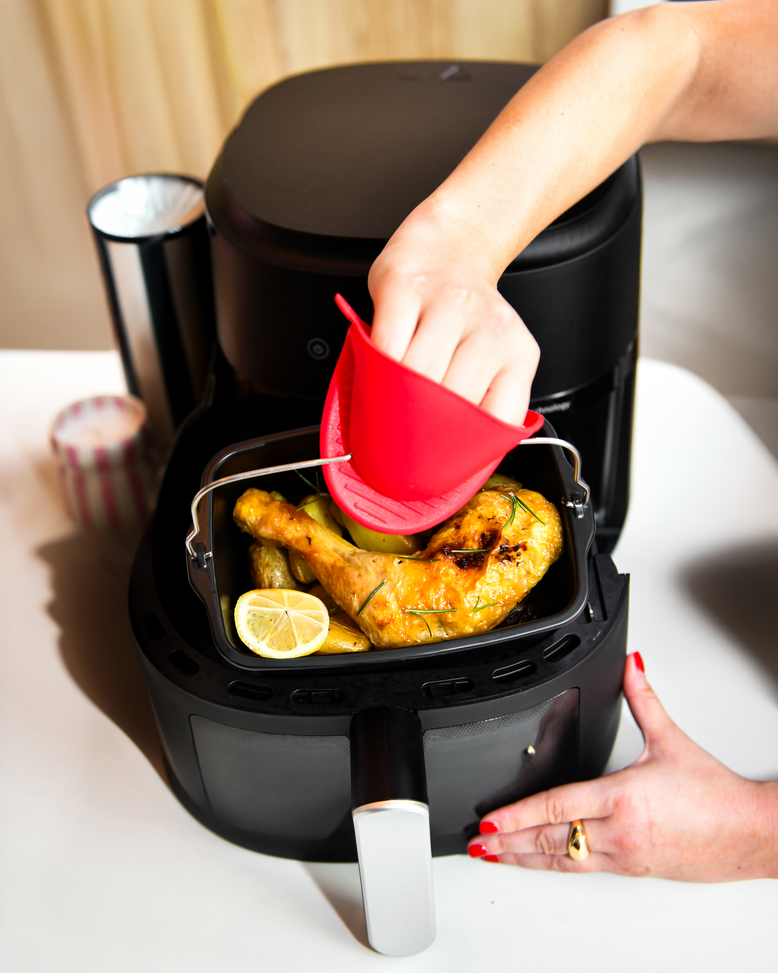
Air fryer dishes : Measure before buying
What sizes of dishes are suitable for an air fryer? In a Nutshell The right dish size for an air fryer depends first on the appliance's configuration: single basket, double...
05/10/20263min -
Are stainless steel pans safe?
Stainless steel pans: Are they good for your health? It's a question that comes up again and again for anyone wanting to update their cookware without compromising their health. Between...
05/10/20264min -
Guide : Why choose a stainless steel pan?
What are the advantages of a stainless steel pans? Stainless steel has become a kitchen staple, used by home cooks and catering professionals alike. Sturdy, easy to look after, and...
05/10/20264min -
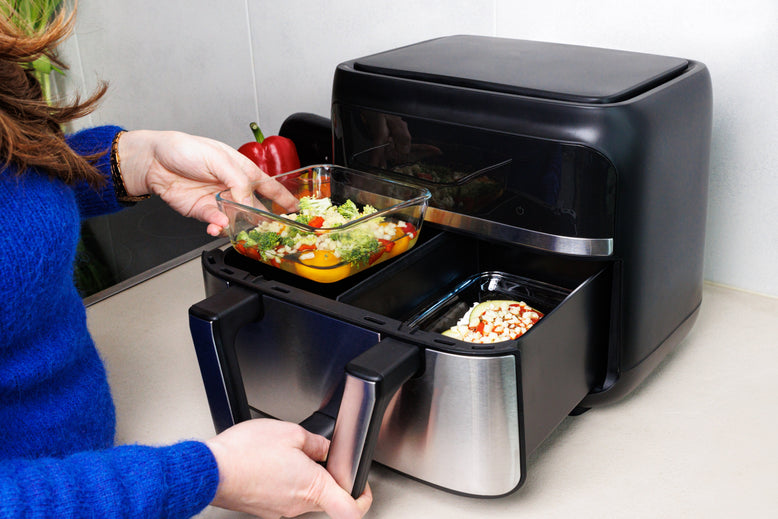
Can you put a glass dish in an air fryer?
Can you put a glass dish in the Air fryer? In a Nutshell Borosilicate glass dishes are compatible with the air fryer: they withstand high temperatures and thermal shock. Ordinary...
05/10/20264min -
Stainless Steel vs Non-Stick Frying Pan ?
Stainless Steel or Non-Stick Frying Pan: Which Should You Choose? In a Nutshell Stainless steel frying pans offer a hard-wearing material and oven compatibility, though cooking with them takes a...
27/08/20264min -
What Dishes Can You Put in an Air Fryer?
What dishes can you put in an Air fryer? In a Nutshell Borosilicate glass and non-stick metal dishes are both perfectly suited to the air fryer: they withstand high temperatures...
27/08/20264min -
Can you put a dish in an Air Fryer?
Can you put a dish in the air fryer? Yes, and it's often the best way to cook food in an air fryer or branch out into new recipes. The...
02/07/20264min
