
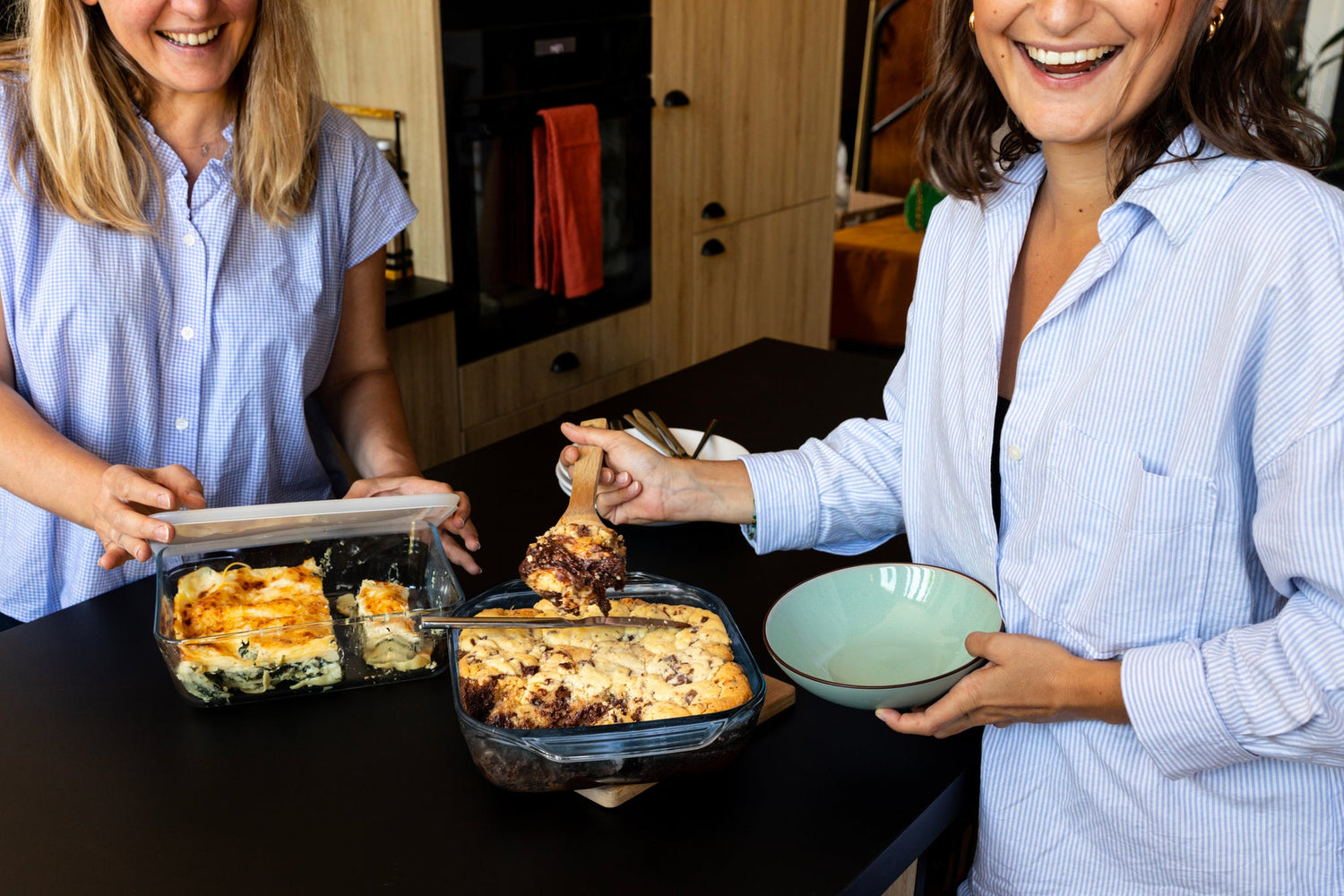
Batch cooking guide: tips and essential accessories
Another trendy word, you might say? Yes — but if we talk about preparing your meals in advance, saving time in the kitchen, and giving yourself more free time, we’re sure you’re already more interested.
What is batch cooking?
Batch cooking is a method where you prepare several meals in advance — for the whole week, for example — in a single cooking session. It requires a little organisation, but it saves time and money while also reducing food waste. Above all, it makes daily meal prep much easier, with no storage issues if you have the right containers. Tempted to give it a try?
The key principles of batch cooking
In short, batch cooking means:
-
Planning your menus for the week
-
Buying the ingredients you’ll need
-
Spending one session in the kitchen
-
Preparing the week’s meals in advance
-
Storing them in suitable containers
-
Tidying up afterwards
-
That’s it!
Pretty great, isn’t it? Especially if you work all week and still have a whole family to feed. And here’s the bonus: batch cooking can even become a family activity! It’s a fun way to keep the kids busy while teaching them how to cook together.
Why try batch cooking?
Batch cooking will allow you to:
-
Simplify your daily routine — no more wondering what to cook each day
-
Save precious time in the kitchen while still eating healthily and enjoying meals that are a bit different from the usual
-
Make significant savings and cut down on food waste by reducing leftovers that often end up in the bin
Batch cooking: it’s all about organisation
Menu planning and shopping list
The hardest part — especially at the beginning — is planning your menus. You need to come up with accessible meal ideas that are balanced and fit within the family’s weekly food budget. But once that’s done, you’ll see how simple it becomes.
When you do your shopping, you buy ingredients for several meals at once, then cook everything in one go. This helps cut down on costs and reduces the risk of food waste. It’s homemade, healthy, and good for both your wallet and the planet!
With batch cooking, your shopping list will contain only what you really need. And if you fancy making a vegetable gratin, you can simply buy a little extra — then turn the rest into a soup or purée another day.
What meals can you prepare with batch cooking?
You can cook almost anything! Even dishes made with fresh ingredients that don’t keep as long — as long as you eat them quickly, there’s no problem. And of course, there are several ways to store your meals, especially with Pyrex® containers!
Start by writing down everything you already have in your fridge and cupboards. That way, you won’t forget anything and you’ll know exactly what’s missing to prepare tasty batch cooking menus.
Always check your weekly menus, and list the recipes you’d like to make, making sure to vary ingredients and prioritise seasonal produce. If possible, assign one dish to each day of the week — this will help you organise which meals go into the freezer (particularly meat- or fish-based recipes, which are more fragile in the fridge).
Batch cooking recipe books
For enthusiasts, why not invest in a few recipe books? If you have a tablet, you can also download an eBook of weekly menus and simply place it on your worktop while you cook. You’ll also find plenty of resources online, including dedicated batch cooking books, such as Caroline Pessin’s bestseller Batch Cooking: 2 Hours for the Week.
Keep track of your favourite recipes and the way you’ve combined them — so you can reuse the same weekly menu again in a month or even a year!
The right equipment for successful batch cooking
Make sure you have food storage containers in different sizes so you can store all types of portions. Preparing meals in large quantities means you need containers that will preserve both flavour and freshness. That’s why we recommend choosing glass storage containers with either glass or BPA-free plastic lids.
Store your meals in containers suitable for the fridge or freezer. When it’s time to eat, enjoy them straight from your glass lunch box or reheat them in a microwave-safe storage dish.
Choosing the right tools for efficient batch cooking
Invest in high-quality knives that will stand up to hours of prep work during your batch cooking sessions:
-
Paring knife
-
Chef’s knife with a high blade
-
Chopping board
-
Peeler
-
Safe mandoline or electric grater
Always check your equipment regularly — nothing is more dangerous than a blunt blade or a knife handle that’s coming loose.
For larger budgets, you might also consider a multifunction cooking robot. And of course, cast iron casseroles, frying pans, and oven dishes will all come in handy.
Preparing and cooking your batch cooking recipes
First, set aside a fixed time slot each week to prepare your meals. Put on some music, and get ready for a few hours of chopping, prepping, cooking, and seasoning!
You’ll quickly notice the time saved by reusing the same ingredients across different meals. For example, 1 kg of carrots can be split between a soup for dinner and a side dish for lunch — meaning you only need to peel them once. Clever, isn’t it?
Remember to store foods that don’t keep well once exposed to air, such as apples or avocados, in a small glass container with a splash of lemon juice.
Finally, organise your workstation by laying out your tools strategically to avoid wasting time searching for them. Optimise your cooking by making the most of every available appliance — oven, hob, air fryer, or multifunction cooker.
How to store your batch cooking
General principles of food storage
Recommended storage times in the fridge:
-
24 hours: raw vegetables, chocolate mousse
-
24–48 hours: fish or seafood dishes, gratin with béchamel, marinated meat, flan, custard
-
48–72 hours: sautéed potatoes, tabbouleh, slow-cooked dishes, minced meat recipes, quiche, cooked vegetables, tomato sauce, crêpes, waffles, fruit tarts
-
3–4 days: vegetable soup, chocolate cake, apple compote
-
5 days: hard-boiled eggs, biscuits, cookies
-
7 days or more: vinaigrette, spreads, yoghurts
Pyrex® batch cooking tips
-
Always cook with extra-fresh ingredients ► do your shopping at the last minute.
-
Fish and seafood should be eaten quickly ► enjoy them at the very start of the week.
-
Vegetarian dishes keep for longer ► save a red lentil dahl for later in the week.
Which containers are best for batch cooking?
-
Airtight glass boxes — ideal for keeping food fresh and reheating in the microwave.
-
Glass jars — perfect for soups, chopped vegetables, and sauces.
-
Glass lunch boxes with fitted lids — easy to take your batch-cooked meals to work or school.
The advantage of glass: it’s neutral, preserves food excellently, easy to clean, and can go straight from freezer or fridge to oven or microwave.
Pyrex® tips for better food storage
Soups freeze perfectly. If you live alone, choose small glass containers (around 250 ml — the equivalent of a soup bowl) so you only defrost the portion you need.
Protect the planet by opting for reusable containers, such as those offered by Pyrex®.
And don’t forget: always keep your fridge clean and well maintained to reduce bacteria that could spoil your meals or cause food poisoning.
The bonus of batch cooking
With batch cooking, you can truly enjoy your evenings during the week. No need to worry about what to cook, no need to spend too much time in the kitchen. Just reheat and enjoy!


