How to Choose a Metal Baking Dish: A Practical Guide
In a Nutshell
-
Metal conducts heat far faster than glass or ceramic: ideal for roasting and any cooking that needs browning and crunch.
-
Stainless steel, carbon steel and aluminium each behave differently in the oven — each has its strengths.
-
Metal bakeware is lightweight, often dishwasher-safe, and moves easily from oven to fridge.
-
They work just as well for gratins and roasts as for baking, and are easy to bake with from day one.
-
For gentle, slow cooking or serving straight at the table, glass remains an excellent complementary option.
Glass, ceramic, cast iron, metal… The bakeware aisle can feel like an obstacle course. Every material has its advocates, its uses, its limits. But if you're after a versatile metal dish that heats up quickly and is easy to look after, a metal baking dish deserves serious consideration. Here's why it has won over so many kitchens, and how to choose the right type for oven cooking.
What Metal Actually Does in the Oven
Metal's great strength is its thermal conductivity. Unlike glass or ceramic, which take time to come up to temperature, metal responds quickly to the heat of the oven. Food starts cooking evenly from the outset, and the base of the dish, in direct contact with the heat, begins working immediately.
This responsiveness is exactly why professional kitchens use metal baking dishes almost exclusively. The golden crust on a gratin, the crisp base of a lasagne, a good crust on a roast: it all happens in the first few minutes, and metal is the material that makes it happen best. It's a concrete advantage you notice from the very first use.
Good to know: Metal conducts heat approximately 10 times faster than glass. This basic fact of physics explains the difference in results between a gratin from a metal dish and the same gratin from a glass one.
Stainless Steel, Carbon Steel or Aluminium: Which to Choose?
Not all metal baking dishes are the same. Three types of material account for most of the market, each with its own distinct behaviour in the oven.
Stainless Steel: the Durable Choice
Stainless steel is the kitchen stalwart, and for good reason: it resists scratches, cleans easily and goes in the dishwasher without restriction. It handles high oven temperatures without issue and, under normal cooking conditions, is largely unaffected by acidic ingredients such as tomatoes, citrus or wine-based preparations. Its only drawback is that it conducts heat slightly more slowly than aluminium, though heat distribution across the cooking surface remains very even. This makes stainless steel the ideal choice if you want a reliable roasting dish for the long term — equally at home with a Sunday gratin or a whole roast chicken. One note: avoid storing acidic preparations in it after cooking.
Carbon Steel: the Baker's Favourite
Carbon steel — sometimes called blue steel — is the material of choice for professional bakers and pastry chefs. Its ability to heat quickly and distribute heat very evenly makes it exceptional for baking tart bases, cake tins, and pastries. It requires a little more attention than stainless steel, particularly immediate drying after washing to prevent any rust. In return, it develops a natural patina over time that improves its non-stick qualities and makes it perform better with every use, year after year.
Aluminium: the Lightweight Option
Aluminium is the lightest of the three, making it very practical for everyday use. An excellent heat conductor, it is particularly well suited to bakeware and delivers excellent results for cakes, muffins, bread and loaf tins. Models with a non-stick coating make it easy to bake and turn out without sticking, and simplify washing up. One precaution: bare aluminium can react with highly acidic preparations. For versatile everyday use, opt for treated or anodised models.
What to Cook in a Metal Baking Dish?
Metal comes into its own when heat needs to be seized quickly and distributed evenly. In practice, this covers a wide range of everyday cooking, for which a good set of bakeware is indispensable.
The cooking tasks that benefit most from metal:
-
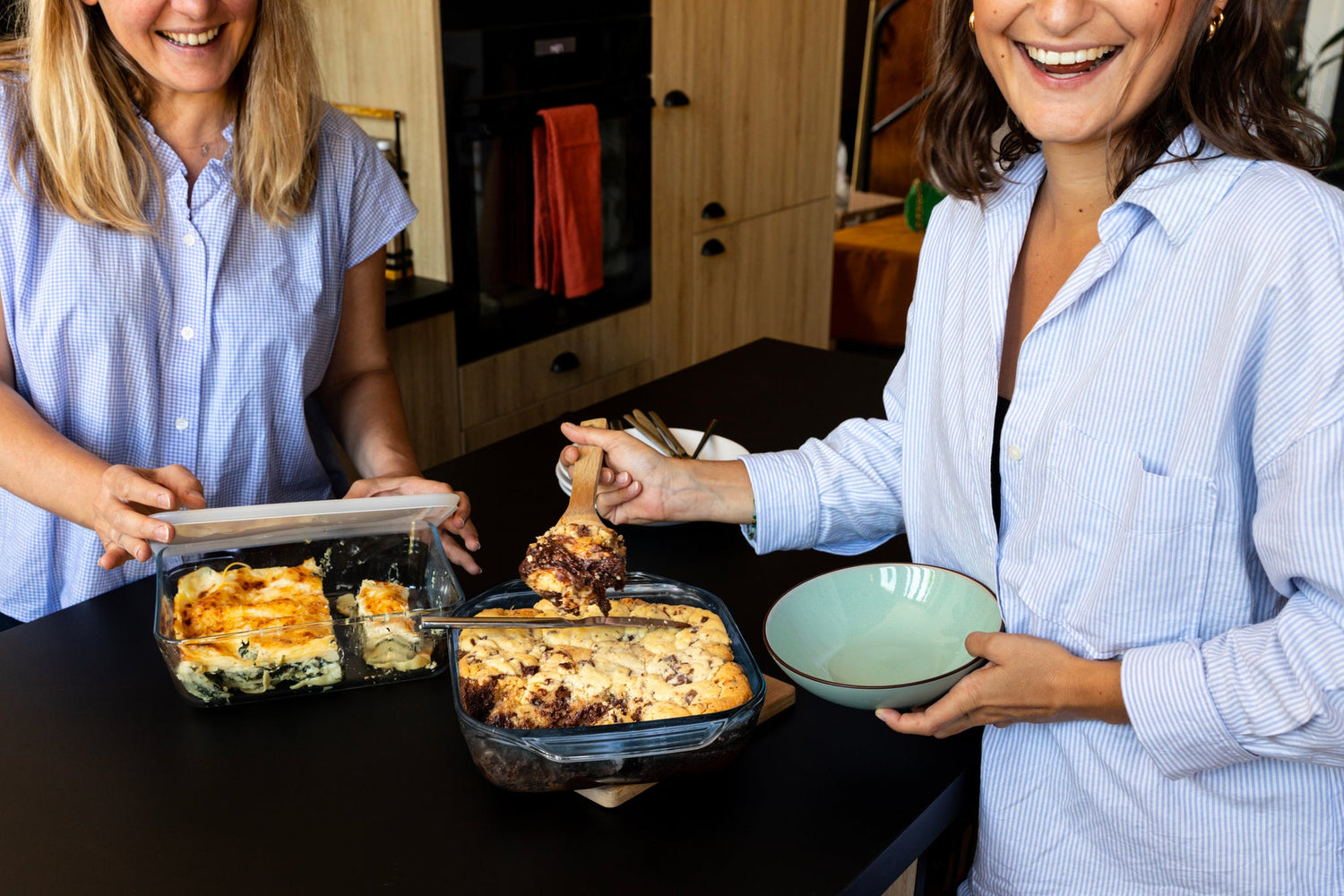
Gratins and lasagne: a well-browned, golden base forms without having to push the temperature up, thanks to the thermal responsiveness of metal.
-
Roasting and poultry: heat grips the meat quickly, encouraging a good crust to form while keeping the juices inside.
-
Fish in the oven: cooking is fast and precise, with no risk of overcooking if you keep an eye on the timer.
-
Baking and cakes: metal ensures even cooking right through to the base, which is essential for sponges that bake evenly, loaf tins and tarts.
-
Roasted vegetables: direct contact with a hot metal oven tray encourages the slight caramelisation that concentrates flavour.
For long, gentle cooking — a confit or a terrine, for example — glass or ceramic may be worth considering: metal isn't necessarily the best choice in those cases.
Care and Durability: Good Habits to Keep
A well-maintained metal baking dish will last for years. A few simple habits are all it takes to preserve its qualities and keep it in good condition.
-
Dishwasher: stainless steel and anodised aluminium are generally dishwasher safe. For models with a non-stick coating, hand-washing with a soft sponge is preferable — it will extend the life of the coating considerably.
-
Utensils: on non-stick surfaces, use silicone or wooden spatulas. Metal utensils scratch the coating and will eventually degrade it.
-
Drying: for carbon steel in particular, dry the dish immediately after washing. It's the only way to prevent oxidation.
-
Storage: if you stack your dishes, place a tea towel or sheet of parchment paper between each one to protect the surfaces.
One practical tip that's often overlooked: never put away a metal dish that's still damp, especially if it's carbon steel. A well-maintained dish works out far cheaper in the long run than regularly replacing ones made from more fragile materials.
FAQ
Can a metal baking dish go in a fan oven?
Yes, without restriction. Fan-assisted heat actually improves heat distribution around the dish, reinforcing one of metal's main advantages: even cooking throughout.
Can a stainless steel dish go in the microwave?
No. Metal is not microwave-safe: microwaves cannot penetrate metal and can damage the appliance. Use glass or ceramic in the microwave.
What's the difference between a stainless steel dish and a glass dish for a gratin?
Stainless steel heats up faster and promotes browning on the base and sides. Glass takes longer to reach temperature but retains heat better once the oven is switched off, which is handy for serving straight at the table. Both give excellent results, for different reasons.
How do I stop food from sticking in a metal baking dish?
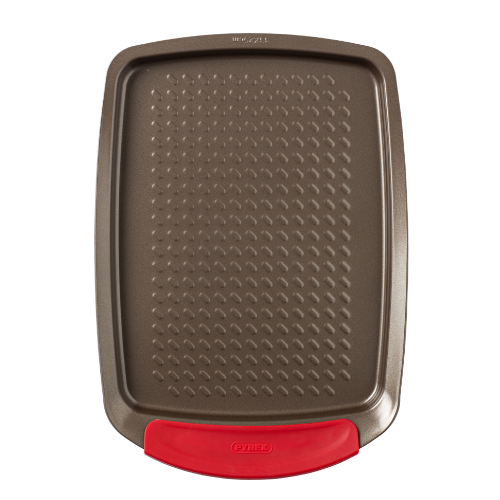
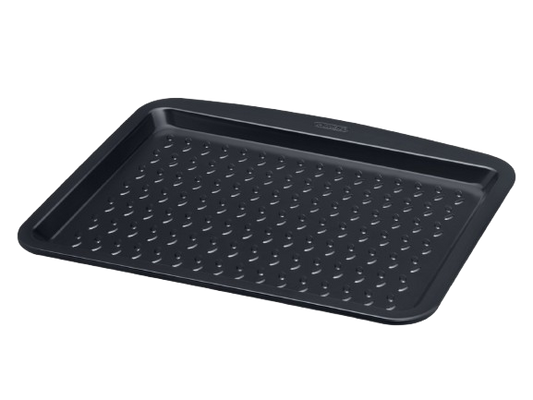
Lightly oil the dish before use, or line it with parchment paper. For moist dishes such as gratins or lasagne, a thin layer of butter or oil is usually enough. Better still: choose a Pyrex® metal baking dish. Thanks to their stick-resistant coating, nothing sticks and every bake turns out cleanly.