Can you put a stainless steel pan in the oven?
In a Nutshell
-
Stainless steel handles oven heat brilliantly: it's the cookware as a whole that determines oven safety.
-
The deciding factor: the handle material. All-metal or removable handles are oven-safe. Bakelite, plastic or wooden handles aren't.
-
An oven-safe stainless steel pan opens up combined cooking methods: searing on the hob, finishing in the oven using the same piece of kit.
-
The result: a golden crust and a tender centre, all without multiplying the washing-up.
-
Always check the oven symbol on the packaging or instructions before putting your pan in the oven.
The short answer: yes, a stainless steel pan can go in the oven. But the stainless steel itself isn't the issue—it's everything else attached to it. Handle, lid, any coating: each component has its own temperature limit, and any one of them can rule out the oven entirely. Here's what you need to know to get your recipes right without any nasty surprises when cooking with stainless steel.
Why stainless steel copes so well in the oven
The 18/10 grade stainless steel used in quality cookware is an alloy that stays stable at high temperatures. Made from iron, chromium (18%) and nickel (10%), this material won't warp, won't react with food and won't release any nasties at domestic cooking temperatures. Professional kitchens have relied on it for decades precisely because it can withstand oven heat without flinching.
The body of a stainless steel pan poses no problem in the oven. It's what's attached to it that raises questions about oven safety.
The handle is what really matters
This is the number one thing to check. In an oven, heat surrounds the pan from all sides, unlike the hob, which only heats from below. A handle that stays cool on the stovetop becomes scalding at 200°C.
-
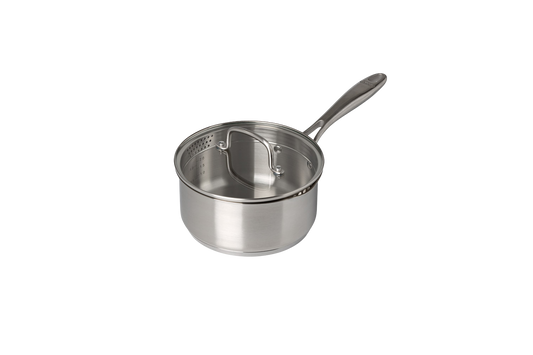
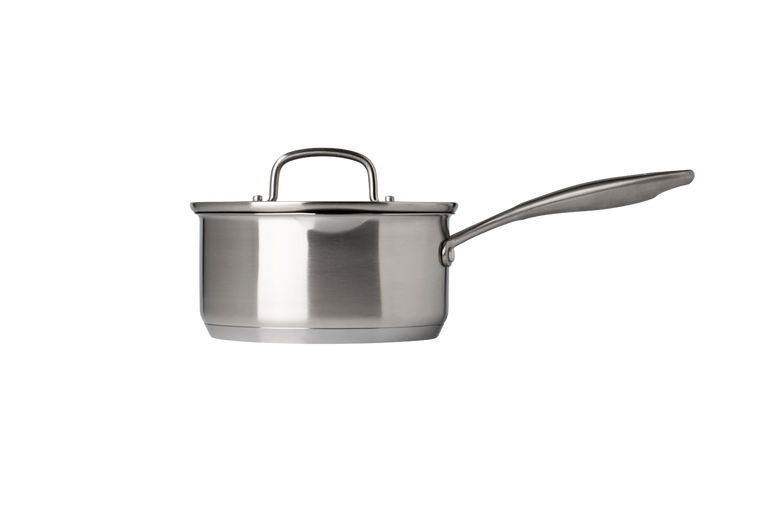
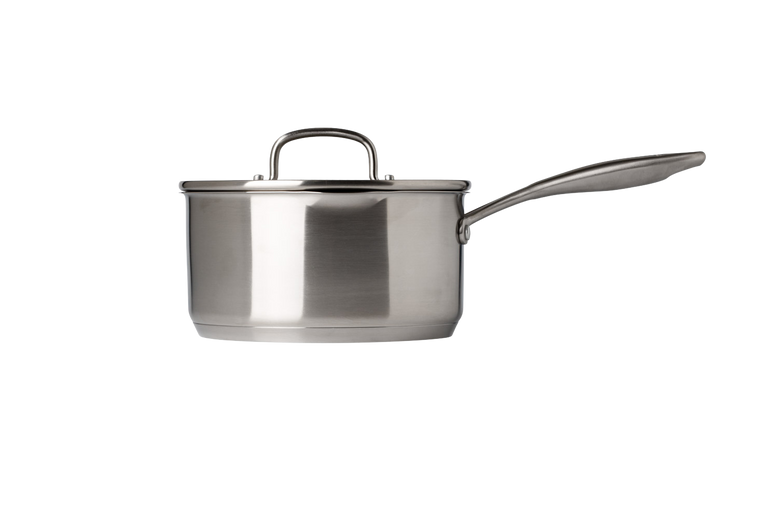
All-metal handle (welded or riveted): no practical temperature limit for home cooking. It's what professional chefs use.
-
Removable handle: ideal. Take off the handle, put the pan in the oven.
-
Bakelite or plastic handle: won't go in the oven under normal cooking conditions, or only at low temperatures (around 120–150°C maximum, depending on the maker). You must check the specifications.
-
Silicone handle: varies by product, generally between 180 and 230°C. Always check what the manufacturer says.
-
Wooden handle: not oven-safe. Wood deteriorates quickly under dry heat.
The simplest rule when you choose saucepans: if the handle is entirely metal, it's oven-safe.
What about the lid?
A stainless steel lid poses no problem. Glass lids can go in the oven provided their heat resistance is confirmed by the maker—it's not automatic. A plastic knob or handle rules out the oven. When in doubt, cook without a lid or cover with baking parchment.
Why oven-safe cookware is such a useful thing to have
The oven compatibility of a stainless steel pan isn't just a technical detail—it's proper culinary freedom.
Combined cooking (searing on the hob, finishing in the oven in the same piece) is one of the most-used techniques in professional kitchens. It delivers what neither the hob nor the oven can manage alone: a golden, caramelised surface and a gently, evenly cooked centre.
Crispy chicken thighs. Brown them over high heat for a few minutes in the pan, then transfer to the oven at 180°C to finish cooking. The skin goes crispy, the flesh stays juicy. You can't get that starting in the oven alone.
Braised lamb. Brown the meat and colour it on the hob with veg and herbs. Add liquid, cover, slide into the oven at 160°C for long, gentle cooking. The result melts in the mouth.
A pasta or veg gratin. Start on the hob to heat the base, finish in the oven to brown the surface. One piece of kit, start to finish.
The practical advantage is real: less washing-up, no faffing about transferring from dish to dish, and cooking juices that stay where they should.
The precautions worth remembering
Oven cooking with a stainless steel pan is straightforward once you know a few basic rules to ensure safe use.
Never put an empty pan in a hot oven. Without food inside to absorb the heat, the base can warp. Always use oven gloves to safely take the pan out—a stainless steel handle conducts heat brilliantly and will burn you just like the rest of the pan. Let it cool before washing rather than plunging it straight into cold water, which causes thermal shock and can damage the cookware.
If your pan has a non-stick coating inside, check the maximum temperature given. It's often lower than bare steel (usually between 180 and 230°C depending on the coating). And always check the oven symbol on the packaging or in the specifications before putting your pan in the oven.
How to choose oven-safe stainless steel cookware
If combined cooking methods interest you, make oven compatibility part of your buying decision.
The handle comes first. All stainless steel or removable is the most versatile setup for oven use without constraints. A tri-ply construction (stainless steel / aluminium / stainless steel) ensures even heat distribution, both on the hob and in the oven, which means more consistent cooking and prevents hot spots. The oven symbol should appear on the product packaging—without it, oven safety isn't guaranteed by the maker.
Find the Pyrex® saucepans selection and all the pots and pans to build a cookware set suited to all your cooking methods.
FAQ
Can a stainless steel pan with a Bakelite handle go in the oven?
Under normal cooking conditions, no. Bakelite generally can withstand temperatures around 120 to 150°C depending on the model, which isn't enough for most oven recipes. Check your maker's specifications before using it.
Does stainless steel discolor in the oven?
Golden or rainbow-like marks can appear on the surface after repeated exposure to high temperatures. It's purely cosmetic, with no impact on food safety or the pan's performance.
Can you use the grill with a stainless steel pan?
Carefully. The grill produces very intense, direct heat. If the pan is entirely stainless steel, it can technically handle it, but grease splatter and extreme temperatures can speed up tarnishing. Never place the pan too close to the heating element, and check the maker's specifications.