A staple of professional kitchens for decades, the stainless steel saucepan is now an essential for discerning home cooks. Durable, safe, and compatible with all hobs including induction, it combines strengths that few materials can match. The key is knowing what it does particularly well, and how to get the most out of it every day.
In a Nutshell
- A stainless steel saucepan is made from stainless steel, an alloy of iron, chromium, and nickel. 18/10 grade is recommended for cooking.
- Completely inert, it won't alter the taste, smell, or appearance of food, even with acidic preparations such as tomato sauces or lemon-based stocks.
- It excels for long, gentle cooking: sauces, stocks, soups, rice, compotes, and bain-marie.
- Models with a multi-layer base ensure even heat distribution and eliminate hot spots.
- Uncoated and dishwasher safe, it withstands metal utensils and lasts considerably longer than a non-stick pan.
- Induction compatibility depends on the base structure: always check the product description before buying.
What Is a Stainless Steel Saucepan?
Stainless steel is an alloy of iron, carbon, chromium, and nickel. The 18/10 designation indicates its composition: 18% chromium for corrosion resistance, and 10% nickel for mechanical strength. This is the recommended grade for cookware subjected to intensive use.
Its defining quality is complete chemical neutrality: stainless steel doesn't react with food, even acidic ingredients, and transfers no flavour, odour, or particles into your cooking. Tomato sauces, white wine stocks, lemon marinades — none of it affects the taste or smell of what you're making. This is precisely why stainless steel became the reference material in professional catering.
The quality of a stainless steel saucepan depends largely on how its base is constructed. A single-layer base in pure steel conducts heat poorly and creates hot spots. Good models feature a multi-layer base combining stainless steel with an aluminium core, which ensures a steady rise in temperature and even heat distribution across the entire cooking surface.
How to Choose a Stainless Steel Saucepan
Multi-layer base: the essential criterion
A simple stainless steel base conducts heat poorly and produces hot spots. Look for a multi-layer base incorporating aluminium: it ensures a rapid rise in temperature and an even cooking surface, which is essential for sauces and delicate preparations. This is the first thing to check before purchasing any stainless steel cookware.
Size: matching diameter to use
Size determines cooking quality and how well the pan fits your hob. As a general guide:
- 16 cm: ideal for sauces, creams, and small quantities.
- 18 cm: the most versatile size, suited to one or two people.
- 20 cm: for families and larger preparations: soups, stocks, pasta.
Beyond 20 cm, stew pots are better suited for large-volume cooking. Worth noting: a stew pot can also round out your cookware for generous family preparations.
Handle, lid, and pouring spout
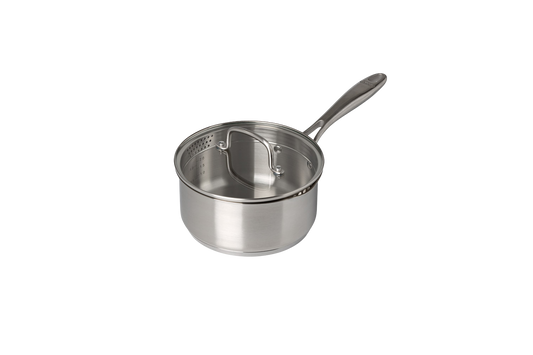
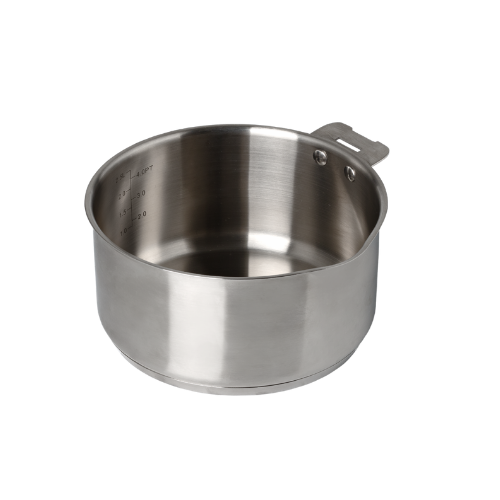
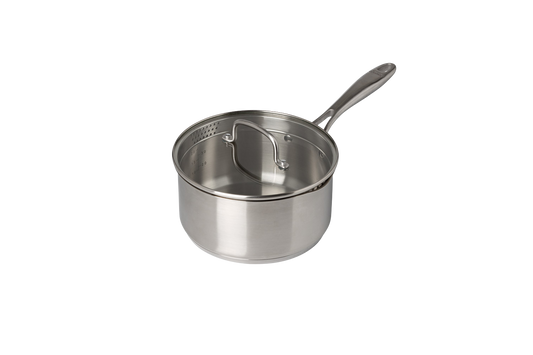
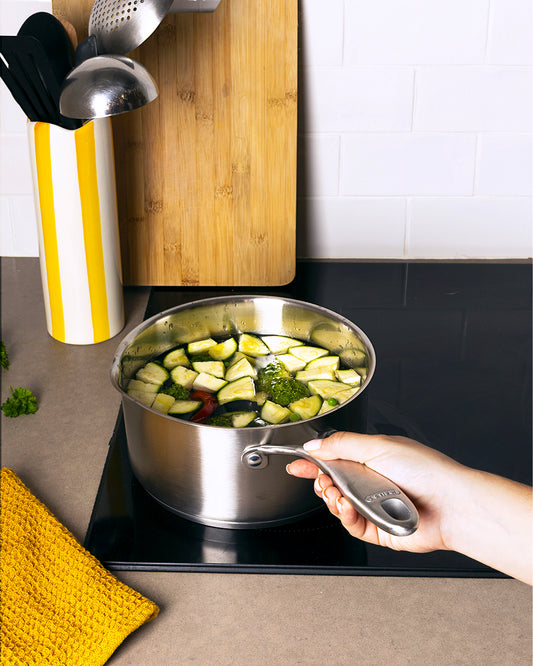
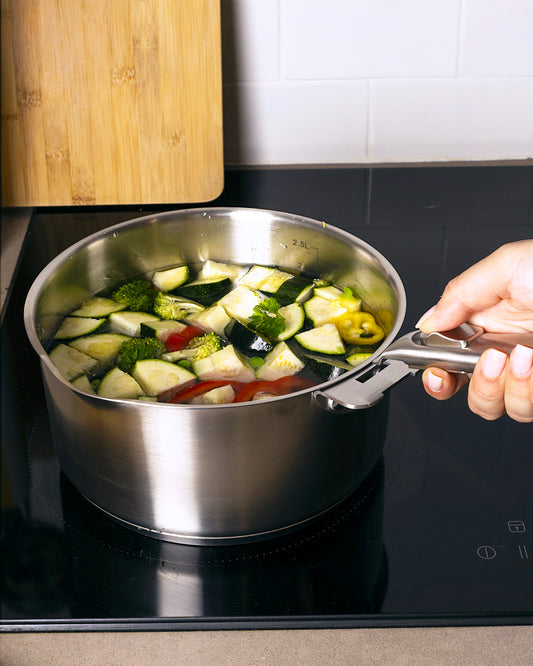
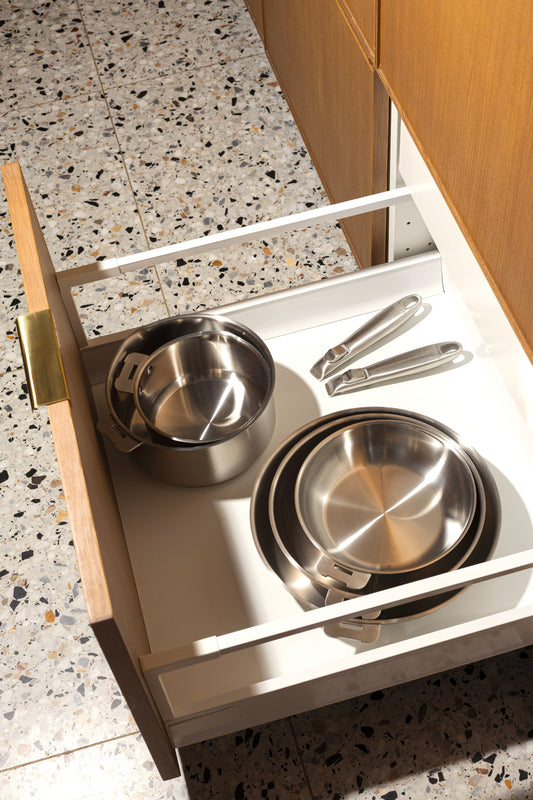
An ergonomic handle that resists heat is essential for safely handling a full pan. A removable handle makes storage easier and allows oven use — a real advantage in kitchens where cupboard space is tight. A well-fitting stainless steel lid lets food simmer without losing steam and goes in the oven along with the pan. Two pouring spouts, one on each side, make serving sauces and stocks considerably more comfortable. Internal measuring marks also help with liquid quantities without needing a separate scale.
Hob compatibility
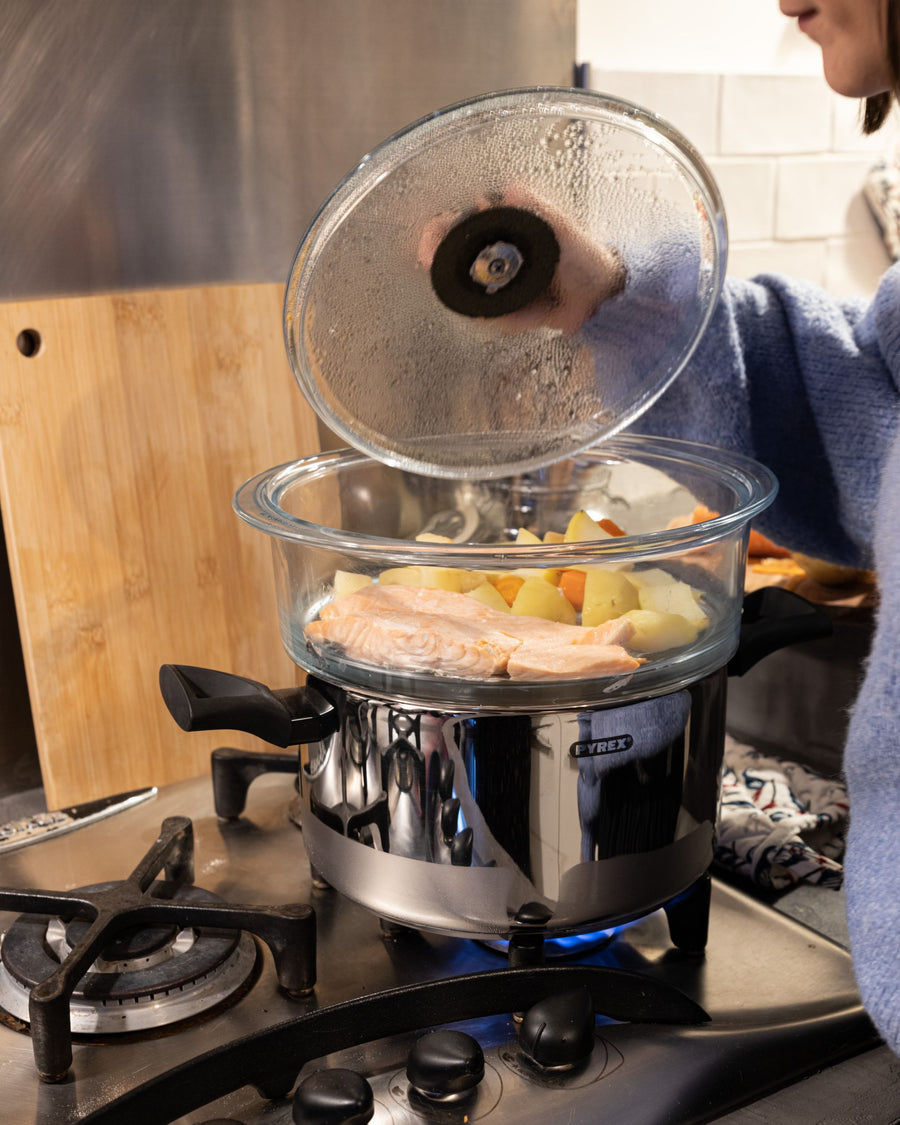
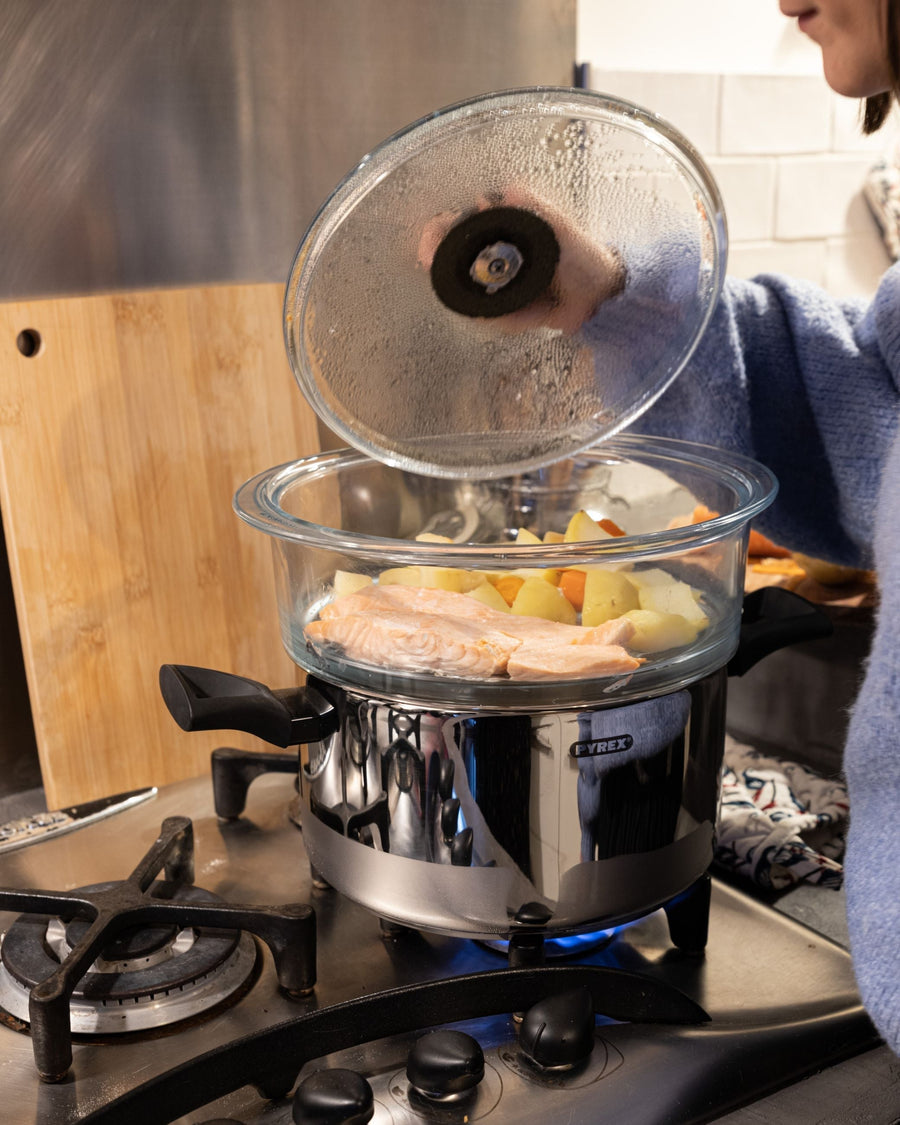
Induction compatibility is not automatic: it depends on the ferromagnetic structure of the base. Before buying, look for an explicit induction hob compatibility statement in the product description. Pyrex® saucepans are compatible with all available hobs: induction, gas, halogen, ceramic, and electric.
Use and Care
Preventing food from sticking
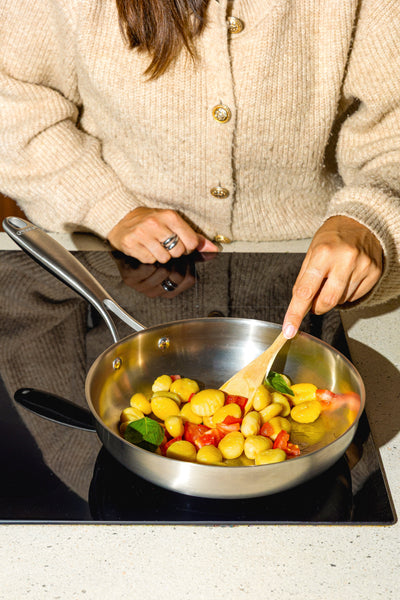
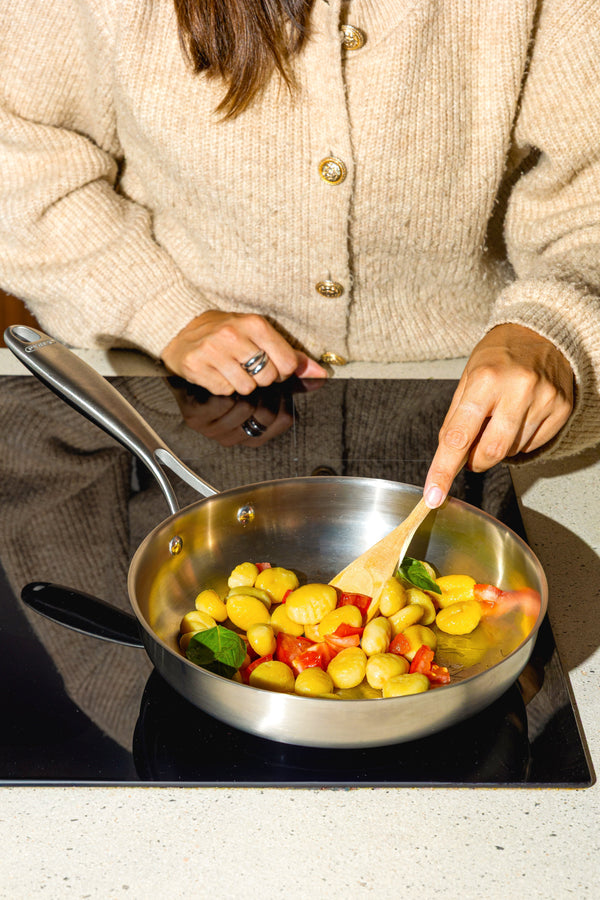
Stainless steel sticks when it isn't at the right temperature. Heat the pan on a medium heat before adding anything. To check, flick a few drops of water onto the cooking surface: if they form small beads that roll around without evaporating, the pan is ready. Add fat if needed, then your ingredients. For liquid preparations — stocks, sauces, cooking water — sticking is not an issue.
Hassle-free maintenance
Uncoated stainless steel cookware is easy to clean: hot water and washing-up liquid is sufficient in most cases. The pan is dishwasher safe and robust enough to take a scouring sponge — unlike non-stick cookware, you won't scratch the surface or damage the pan. Simply avoid bleach, which attacks the metal, and always let the stainless steel pan cool before running it under cold water to prevent thermal shock. Limescale deposits or bluish marks lift easily with diluted white vinegar or lemon juice, with no risk to the stainless steel.
Stainless Steel or Non-Stick: Which to Choose?
It's not a question of superiority — it's a question of use. The stainless steel saucepan comes into its own for long, precise cooking: stocks, reduced sauces, bain-marie, pasta. Its durability and chemical neutrality make it a sound long-term investment.
For everyday quick and gentle cooking — reheating a dish or preparing small quantities of delicate ingredients — a PFAS-free non-stick pan is the more practical choice. Pyrex® aluminium pots and pans, lightweight and easy to maintain, are designed precisely for those uses. Browse the full range of Pyrex® saucepans to find the right stainless steel pan for your kitchen. In a well-stocked kitchen, the two naturally complement each other.
FAQ
What is the difference between 18/10 and 18/0 stainless steel?
The alloy composition directly determines how well the pan holds up. With 10% nickel, 18/10 stainless steel withstands temperature variations and intensive use better than a nickel-free alloy. For a stainless steel pan used daily on all hob types, this is the grade to go for.
Is a stainless steel saucepan induction-compatible?
Not automatically: it depends entirely on the base composition. Only a ferromagnetic base responds to the magnetic field of an induction hob. Before buying, look for the induction symbol in the product description or the spiral symbol on the base of the pan.
Can a stainless steel saucepan go in the dishwasher?
Yes — and this is one of the practical advantages of stainless steel cookware over coated materials. Being uncoated, there's no risk of delamination or surface damage from hot cycles and detergent. The pan is genuinely dishwasher safe, and a quick dry after washing is enough to prevent limescale deposits.
Can you use a stainless steel saucepan for a bain-marie?
It's one of the uses for which a stainless steel pan is particularly well suited. Fill a large pot with water, bring it to a gentle simmer, then place a smaller stainless steel saucepan inside without letting it touch the bottom. The heat spreads slowly and in a controlled way — ideal for melting chocolate, making hollandaise, or preparing a delicate cream without any risk of burning.






 FR
FR EU
EU





 Successfully added!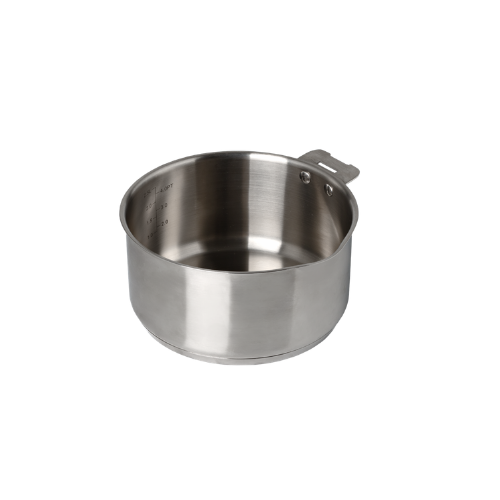
 Successfully added!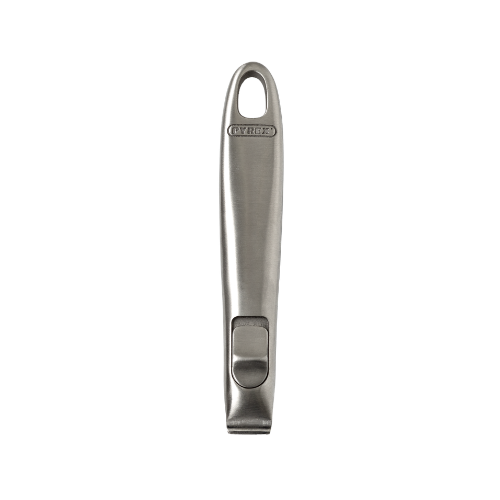
 Successfully added!