In a Nutshell
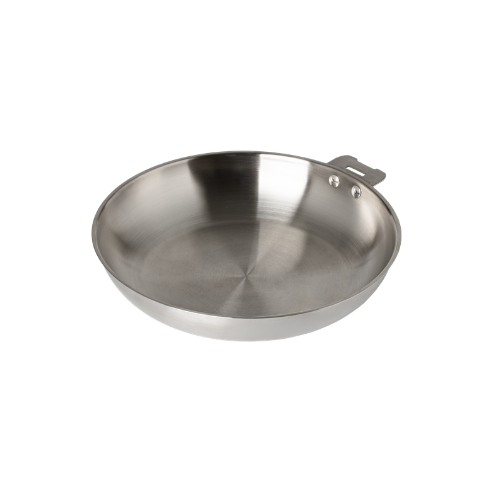
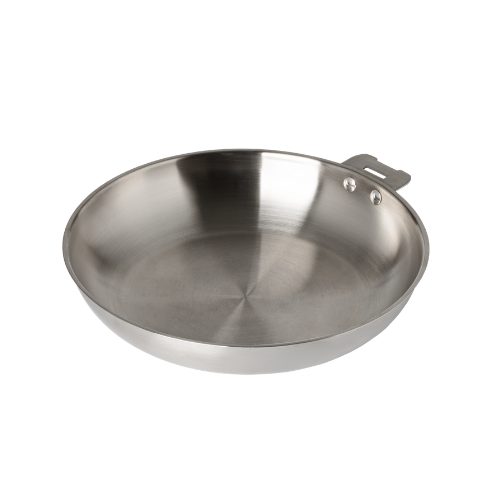
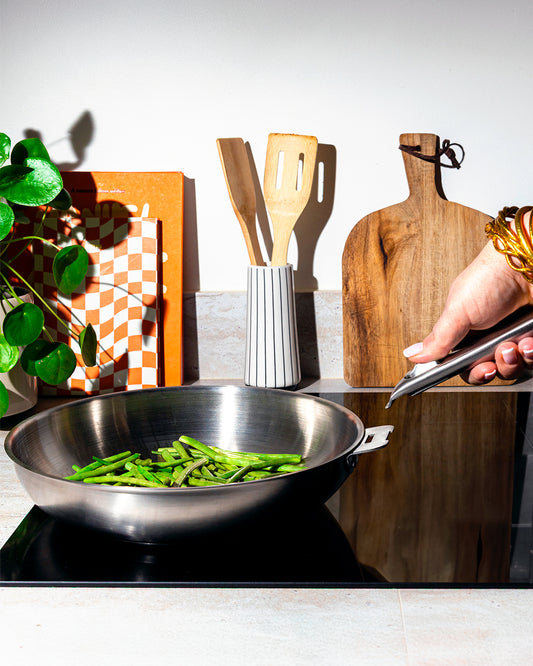
- A stainless steel frying pan works on all hobs — including induction — and is oven-safe for versatile everyday use.
- 18/10 stainless steel is an uncoated, non-reactive material: it releases no harmful substances and preserves the taste and nutritional qualities of your ingredients.
- A multi-layer base (steel and aluminium) ensures even heat distribution, especially important on an induction hob.
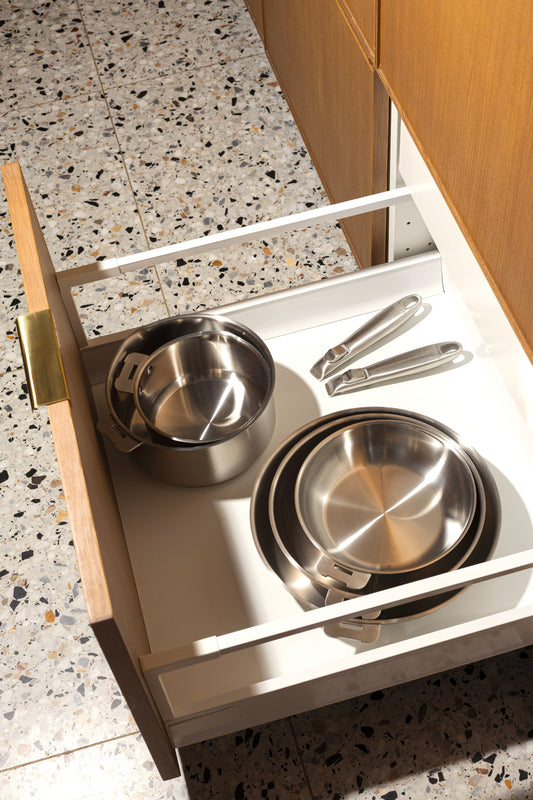
- A removable steel handle offers greater flexibility: easier storage, and the pan goes straight into the dishwasher.
- A good-quality pan lasts decades with proper care — an investment rather than a consumable.
- The key to great results: preheat on a medium heat before adding any oil or butter, then let what you're cooking release naturally from the surface.
A stainless steel frying pan earns its place in the most demanding kitchens for good reason: robust, hygienic, and compatible with all hobs, it never lets you down. Whether you're searing meat over a high flame, reducing a sauce, or deglazing at the end of a fry, it handles the lot. Here's everything you need to pick the right pan — and get the best out of it.
Stainless steel frying pans for every occasion
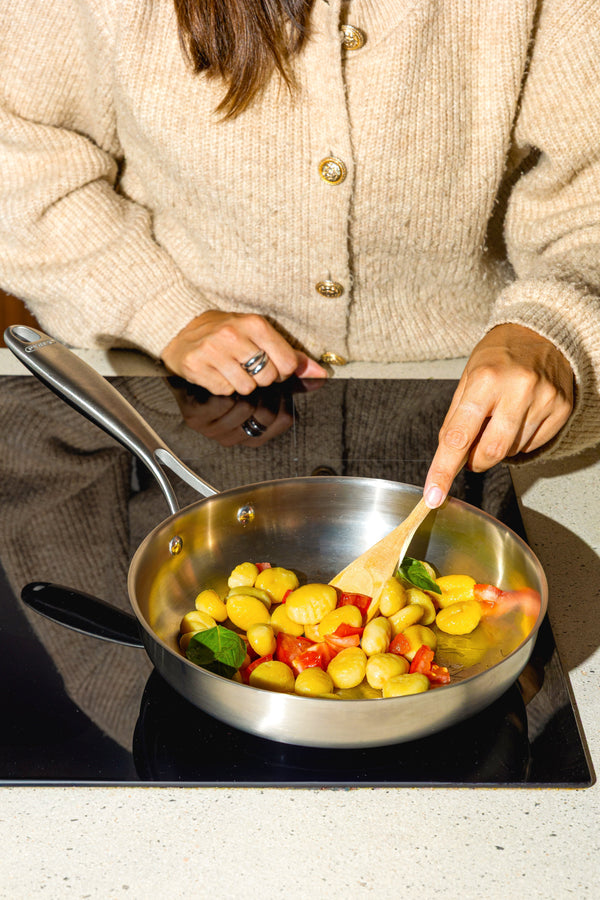
A stainless steel frying pan is a reliable workhorse for anyone who cooks regularly and wants equipment that performs year after year. With no coating to protect, it handles high temperatures and moves effortlessly from hob to oven. It's equally at home searing a duck breast, sautéing vegetables, building a sauce, or frying a whole fish fillet.
What sets it apart is its neutrality. Uncoated stainless steel doesn't interact with ingredients: it releases no harmful substances during a fry, retains no odours from one dish to the next, and leaves taste and nutritional qualities completely intact. That neutrality is what made it the go-to choice in professional kitchens — and what explains its growing place in home cooking.
Browse our full range of frypans and pick equipment built to last.
What is 18/10 stainless steel?
18/10 stainless steel — international standard 304 L — is the most widely used austenitic steel in cookware, and its composition explains why: 72% iron, 18% chromium, and 10% nickel.
Chromium is what makes the alloy genuinely stainless. When exposed to air, it spontaneously forms a self-regenerating passivation layer that protects the metal from rust and corrosion, even in the presence of moisture or acidic ingredients such as tomatoes, lemon, or vinegar. This layer reforms on its own if the surface is scratched, which accounts for the exceptional longevity of cookware made from this alloy. Nickel reinforces its mechanical properties and resistance to temperature fluctuations, keeping the pan from warping with use.
This grade of steel is the reference in professional catering precisely because it meets the most stringent food hygiene standards — reassurance that matters just as much at home.
How to pick a stainless steel frying pan
Size: matching the diameter to your needs
Diameter has a direct impact on the quality of your fry. A pan that's too crowded won't sear properly; one that's too large for the quantity being cooked spreads warmth too thinly and wastes energy.
- 20 cm: ideal for individual use — eggs, single portions, small sauces.
- 24–26 cm: the most versatile size for everyday meals, suited to 2–3 people. Handles meat, vegetables, and fish with ease.
- 28 cm and above: for families or larger gatherings. Offers a generous surface for big batches and family-sized portions.
The key is to match the diameter to both the quantity you're preparing and the size of your hob ring, for the best results.
Single-layer or multi-layer base?
Steel alone isn't the most efficient conductor of heat. That's why premium pans feature a multi-layer base combining stainless steel and aluminium. This construction ensures warmth spreads evenly across the entire surface, right to the edges, eliminating hot spots. It's a particularly important factor on an induction hob, where temperature concentrates at the centre if the base isn't designed to spread it.
Fixed or removable handle?
A fixed steel handle offers solidity and heat resistance with no moving parts to worry about. Pans with a removable handle have their own advantages: they store more easily, go into the dishwasher in one piece, and move seamlessly from hob to table. A genuine asset where storage space is tight. Fixed plastic handles, on the other hand, rule out oven use entirely.
The benefits of a stainless steel frying pan
Healthy cooking, free from harmful substances
18/10 stainless steel is an uncoated, non-reactive alloy: it doesn't interact with what you're cooking, even highly acidic ingredients. Its smooth surface is achieved through very fine polishing that eliminates all porosity, preventing the build-up of bacteria and residue. Even at extreme temperatures, it produces no emissions — there's nothing to wear down, and no special precautions to take as a result. Just a pan you can use with confidence.
Works on all hobs — oven included
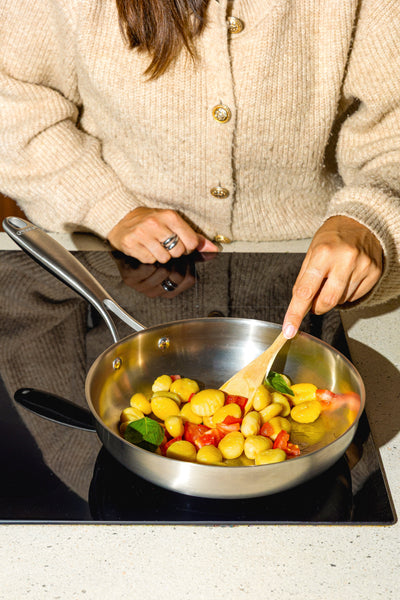
Compatible with all hob types — gas, electric, ceramic, halogen, and induction — a stainless steel frying pan is also oven-safe (provided it doesn't have a fixed plastic handle), opening up two-stage cooking: start on the hob, finish above, all in the same pan. Very few materials offer that kind of flexibility.
Built to last
With no non-stick coating to preserve, it tolerates metal utensils, high-temperature use, and intensive everyday service. It withstands temperature changes, won't crack under impact, and holds its shape. Properly cared for, a quality pan will serve your household for decades — a long-term investment, not a replacement purchase.
Simple, hygienic cleaning
The smooth surface wipes clean with hot water, a soft sponge, and a little washing-up liquid — cleaning takes seconds. For stubborn marks, a few drops of white vinegar in the rinse is enough to bring back the shine. The dishwasher is an option, but using it sparingly preserves the finish better over time.
How to use a stainless steel frying pan
A stainless steel frying pan rewards a little technique — and once you have it, the results speak for themselves. The single most important habit is preheating: a cold pan is the leading cause of sticking, regardless of how good the uncoated surface is.
- Preheat on a medium heat for one to two minutes, without adding any oil or butter.
- Check the temperature by flicking a few drops of water into the pan. When they form small beads that roll across the surface without evaporating instantly, the pan is ready.
- Add a small amount of oil or butter, then place your ingredients in the pan.
- Don't move anything straight away: it will release naturally from the surface once properly seared.
- Deglaze at the end with a splash of stock or wine to lift the caramelised bits from the base and build a quick sauce directly in the pan.
For high-heat stir-fry — prawns, vegetables, or noodles tossed at speed — woks are well worth a look alongside your stainless steel frying pan.
The Pyrex® range of frying pans and saucepans
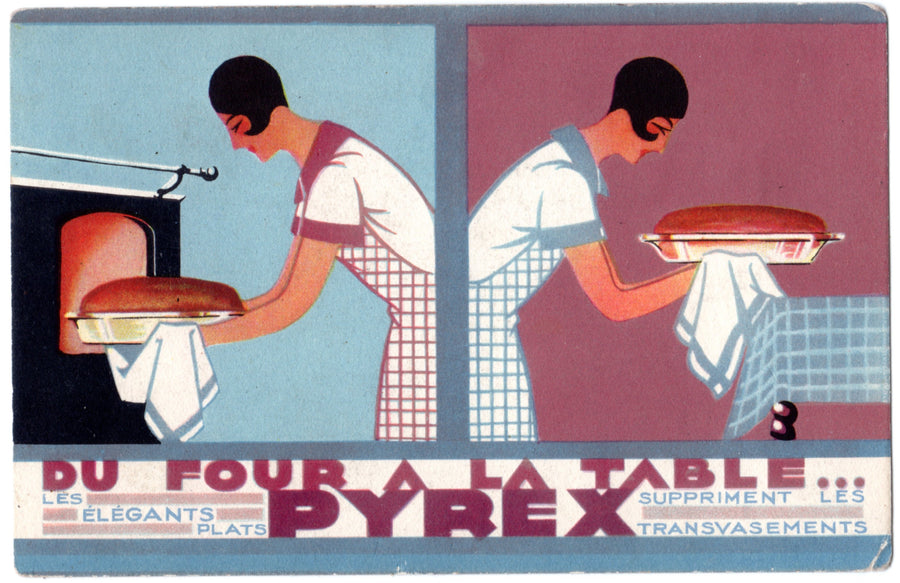
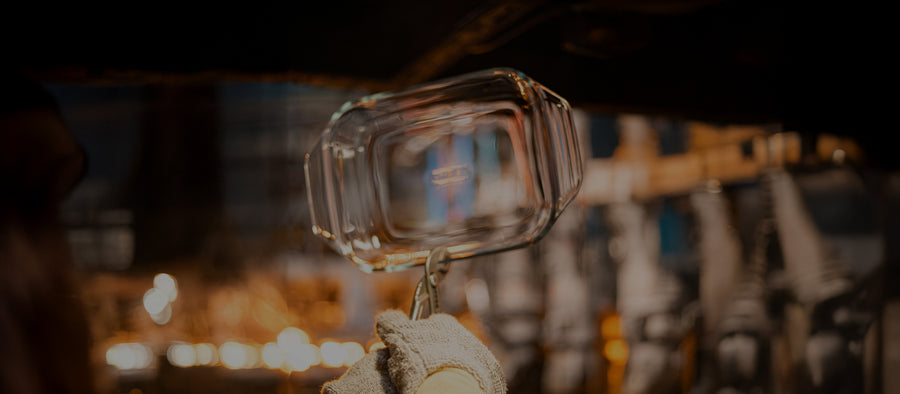
Pyrex® has been equipping households since 1915. Founded in the United States, established in France since 1922, and manufactured in Châteauroux, the brand built its reputation on a straightforward principle: make cookware that lasts and that you can cook in with complete confidence. That philosophy — the same one behind the worldwide success of Pyrex® borosilicate glass bakeware — now drives the development of a cookware set range crafted to the same exacting standards: performance, durability, and built to go the distance.
Our deep frying pans are designed with the same commitment to quality and ease of everyday use — whether you're building a full pan set or adding a single piece. Browse the full range and find what suits the way you cook.
FAQ
What size stainless steel frying pan should I choose?
Choose based on how many people you're cooking for and how you typically use it. A 20 cm pan suits one person; 24–26 cm works well for 2–3 people; 28 cm and above is ideal for families. Make sure the diameter also matches your hob ring for the best results.
Is a stainless steel frying pan compatible with induction hobs?
Yes. This uncoated material works on all hob types, including induction. For the most even results, look for a model with a multi-layer base.
How do I stop food sticking in a stainless steel frying pan?
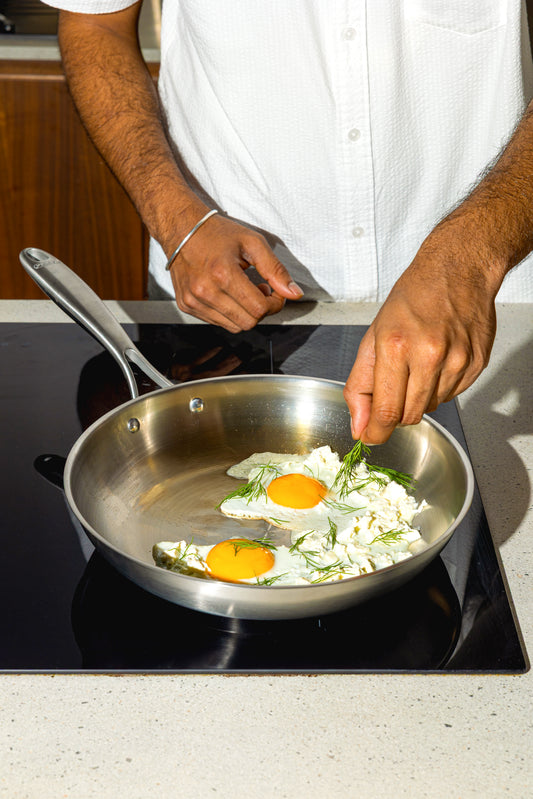
The key is preheating. Heat the pan on a medium heat without any fat until a few drops of water flicked in form small beads that roll across the surface. Add your oil or butter, then your ingredients — and don't move them straight away. They'll release on their own once properly seared. The same technique works for eggs.
Can a stainless steel frying pan go in the dishwasher?
Yes, but sparingly. An occasional run through is fine; hand-washing with a soft sponge is preferable for keeping the metal at its best over the long term. Day-to-day cleaning by hand takes no more than a minute.
What's the difference between a stainless steel frying pan and a non-stick frying pan?
A stainless steel frying pan is uncoated: it takes a little more technique — particularly around preheating — but offers durability and longevity that no non-stick pan can match. A non-stick pan makes cooking delicate ingredients more forgiving and requires less fat, but the coating needs careful handling and will eventually need replacing. Both have a place in a well-equipped kitchen.






 FR
FR EU
EU


 Successfully added!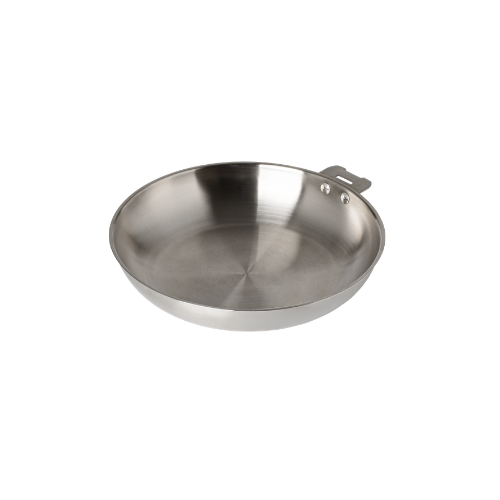
 Successfully added!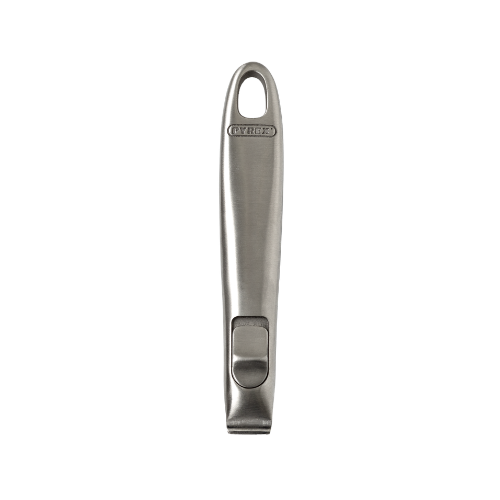
 Successfully added!